
Anticipation
Good anxiety/Bad anxiety

There is a moment before every race that almost every athlete knows.
You wake up before the alarm.
Your stomach feels different.
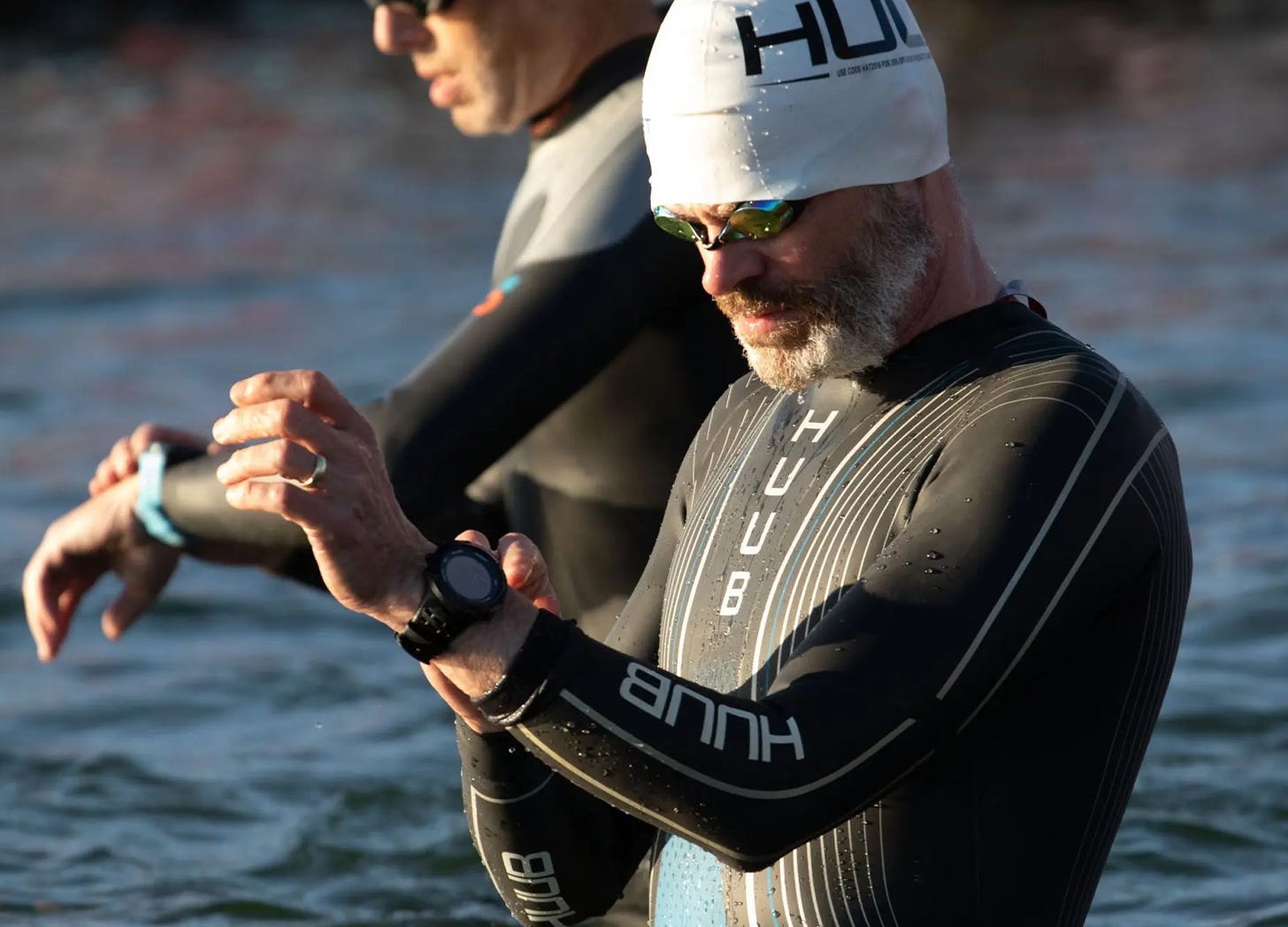
You replay the swim start in your mind. You think about your equipment. You check the weather one more time. You wonder if you’ve trained enough. You wonder if today is the day everything comes together or the day it all falls apart.
People often call that anxiety.
But I’ve come to believe there are actually two very different kinds of anxiety.
One is your ally.
The other is your enemy.
Learning the difference may be one of the most valuable skills an athlete ever develops.
Because anticipation can either sharpen your edge or steal it before the race even begins.
When I raced Kona, people assumed that after winning once or twice the nerves disappeared.
They didn’t.
In some ways they became even stronger.
When expectations grow, so does anticipation. You understand what’s possible. You also understand what’s at stake.
The butterflies never really left.
What changed was my relationship with them.
I stopped trying to eliminate them.
Instead, I learned to ask a simple question.
“Is this helping me?”
Good anxiety almost always has a purpose.
It pulls your attention toward preparation.
It reminds you to double-check your bike.
It encourages you to hydrate.
It reminds you to arrive early.
It keeps your mind alert enough to notice details that matter.
Good anxiety says:
“Pay attention.”
It doesn’t scream.
It whispers.
It’s the quiet voice that reminds you that something important is about to happen.
Every great performance I’ve ever had began with that feeling.
My senses became sharper.
My awareness became deeper.
My focus narrowed.
Everything unnecessary began to disappear.
That’s exactly what you want before a race.
The body is preparing itself.
Adrenaline rises.
Your heart beats a little faster.
Your brain begins filtering out distractions.
Nature designed this response to help you perform.
The goal isn’t to become calm.
The goal is to become ready.
Bad anxiety is completely different.
Bad anxiety isn’t focused on preparation.
It’s focused on imagination.
“What if I fail?”
“What if everyone beats me?”
“What if I cramp?”
“What if I disappoint people?”
“What if all these months were wasted?”
Notice something about every one of those questions.
None of them can be answered.
They all live in a future that doesn’t exist.
Bad anxiety asks questions that have no solutions.
Then it demands answers anyway.
That’s exhausting.
I’ve seen athletes burn more energy worrying about tomorrow than they burn swimming 4,000 meters.
The body doesn’t always know the difference between real danger and imagined danger.
If your mind spends hours rehearsing disaster, your nervous system responds as though disaster has already arrived.
That’s expensive.
Every unnecessary surge of adrenaline drains emotional energy you could be using tomorrow.
I learned something during my years racing Ironman.
Energy isn’t just physical.
It’s emotional.
It’s mental.
It’s spiritual.
You only have so much of it.
Spend it wisely.
One of the biggest mistakes athletes make is trying to suppress anxiety.
They tell themselves,
“I shouldn’t be nervous.”
But why not?
You’re about to do something difficult.
You’re about to ask your body questions that most people never ask theirs.
Of course you’re nervous.
The goal isn’t to eliminate anticipation.
The goal is to direct it.
Think of anxiety as water flowing through a river.
If you build banks around it, it generates power.
If it spills everywhere, it becomes a flood.
Good athletes don’t stop the current.
They guide it.
So how do you know which kind of anxiety you’re experiencing?
Here’s a simple test.
Ask yourself:
“Can I do something about this right now?”
If the answer is yes, do it.
Lay out your race gear.
Check your tire pressure.
Eat your dinner.
Go for a short walk.
Stretch.
Visualize your pacing.
Review your nutrition.
Those actions transform nervous energy into productive energy.
Movement is the antidote to useless worry.
But if the answer is no…
Let it go.
You cannot control the weather.
You cannot control your competitors.
You cannot control whether someone swims over the top of you in the first hundred meters.
You cannot control a flat tire.
You cannot control the unexpected.
Ironically, the athletes who perform best are often the ones who stop trying to control everything.
Confidence isn’t believing nothing bad will happen.
Confidence is believing you’ll handle whatever happens.
Those are very different mindsets.
The night before Kona, I eventually stopped asking whether the race would unfold perfectly.
Ironman never unfolds perfectly.
Instead I asked a better question.
“Whatever happens tomorrow, can I keep solving the next problem?”
The answer was always yes.
That answer brought peace.
Another practice helped me tremendously.
I narrowed my world.
The day before a race, I deliberately stopped thinking about the finish line.
I stopped thinking about winning.
I stopped thinking about the awards ceremony.
Instead I thought about the first buoy.
Then the first bike climb.
Then the next aid station.
Then the next mile.
Anticipation loves huge futures.
Performance loves small moments.
The more your mind lives in tomorrow afternoon, the more anxiety grows.
The more your attention stays with this breath, this meal, this warm-up, this pedal stroke, the quieter your mind becomes.
That’s why breathing became my anchor.
Whenever my thoughts began racing ahead of me, I came back to something that was always happening in the present.
In.
Out.
In.
Out.
The rhythm reminded me that the only race I could influence was the one unfolding right now.
Everything else was fiction.
There is one final truth about anticipation that took me years to understand.
The athletes who care the most often feel the most nervous.
That’s not weakness.
That’s investment.
The butterflies aren’t proof that you’re unprepared.
They’re proof that what you’re about to do matters to you.
The trick is not letting your emotions drive the bus.
Invite them along for the ride.
Don’t hand them the steering wheel.
Because race morning isn’t asking whether you’re afraid.
It’s asking what you’ll do with that fear.
Will you spend it imagining outcomes?
Or will you invest it in attention?
Will you scatter your energy across a thousand imaginary problems?
Or concentrate it into one powerful purpose?
The start line rewards anticipation that has been transformed into action.
Not because fearless athletes win.
But because focused athletes do.
So the next time you wake before dawn with butterflies already circling inside your stomach, smile.
Your body is reminding you that today matters.
Thank it.
Take one deep breath.
Choose what deserves your attention.
And let anticipation become the quiet wind at your back rather than the storm in your head.
That’s when nervousness stops being your opponent.
That’s when it becomes one of your greatest strengths.
Exceptional!
Thanks for leading Mark! And for your generosity.
I hope you’re ok with me sharing an excerpt from one of my books (my first on triathlon) as it is so closely related. Hope you’ll like it. Here it is from the day before Ironman 70.3 Arizona:
“Jess told me before the Muskoka race something that I shared with newbies on the race’s Facebook page during race week. Some athletes disclosed how fearful, hesitant and nervous they were, and they sought reassurance. This is typical during all race weeks. But this time, it reminded me that I was no longer a newbie. My post, which I put up the day before in support of someone freaking out, was the most “liked” posting of the group. To my surprise, many people even privately messaged me, saying how they appreciated it. So I think it helped a few nervous newbies, as it did last August when Jess shared it with me. It went something like this:
“It’s OK to be nervous race week and especially the day before the race. In fact, it’s normal.
Even experienced pro racers often still feel this way, every time. It’s probably even healthy.
Those butterflies you are feeling in your stomach right now, they have come just for you, you know? If you take just a little bit of time, you’ll see they are simply trying to speak to you, to welcome you to this moment you trained so hard for. They are your biggest fans.
Rather than ignore them or try to push them away, welcome them and sit with them for a moment. Appreciate them and their message. Let them fly all around and see them as beautiful, not as something negative. That’s what butterflies do.
But tomorrow morning before the race, it’s your turn to fly. If they are still there, gently but firmly ask them if they want to keep flying; that’s fine, but to all do it in the same direction. Then take that damn energy and channel it right out of you into your race!
I welcomed my butterflies for years playing sports, and they were already flying in the same direction since yesterday in my case. And at morning Transition, in that special place for me, I was feasting on their energy. I thanked them, telling them I had it from here, and bid them goodbye. And just like Muskoka, I went into a calm, almost hypnotic state as I began the one-mile walk to Swim Start. I was confident. I had no more doubt. I was ready. This is me now. And this is what I do.”