
First Find The Quiet
Peace in chaos

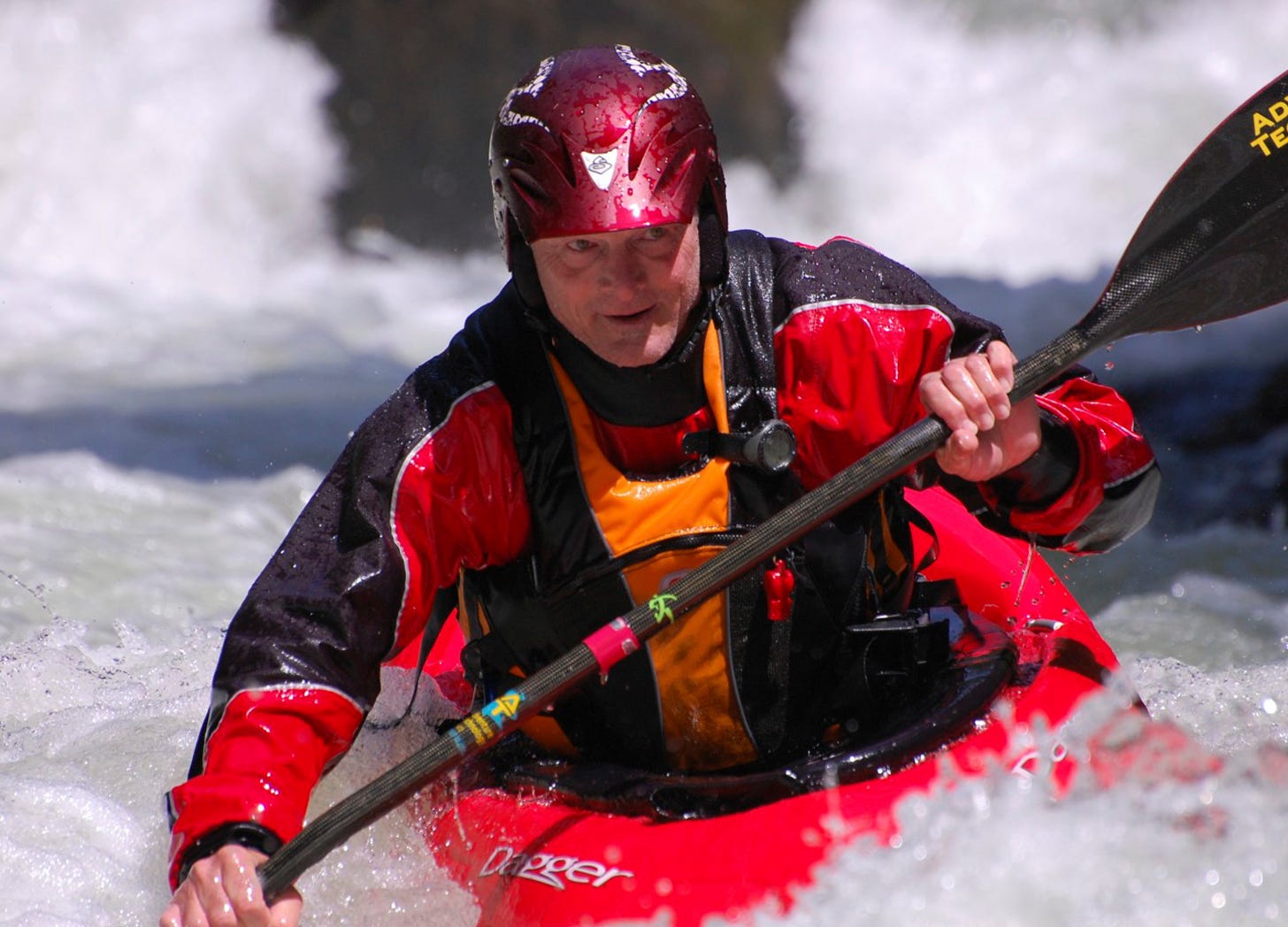
There was a conversation I had with my friend and business partner Scott Zagarino that has stayed with me. He was telling me about what happens in whitewater kayaking when everything goes wrong, when the current flips you upside down, when the water is violent, when you are disoriented, in a dark place, surrounded by chaos. He said that in that moment, the first and most important thing to find is your quiet space. Not the panic. Not the struggle. Not the fear. The quiet place. Because from that place, you can recover from your mistakes. From that place, you can calm the chaos. From that space, you can be effective and reset. And the more I sat with that, the more I realized how true that is not just in whitewater, but in triathlon, endurance sports, and life itself.
The quiet place is not something you find when everything is going perfectly.
It is something you find when everything is not.
That is what makes it so powerful.
In endurance sports, chaos does not always look dramatic. Sometimes it is obvious, a flat tire, a missed bottle, a bad patch in the swim, legs that suddenly go empty, weather that shifts, a race plan that falls apart before the first hour is over. But just as often, the chaos is internal. It is the voice in your head that starts spiraling. It is the panic that says, This is going wrong. I’m losing it. I’m done.
That inner storm can end a race faster than anything happening outside of you.
And that is why the quiet matters so much.
Over the years, one of the biggest lessons I learned as an athlete was that the best performances do not come from forcing everything into place. They come from being able to return to center when things start slipping away. You do not need to control every variable. You need to control your response.
You need to find the quiet.
I think a lot of athletes believe greatness comes from intensity alone. Push harder. Dig deeper. Fight more. And yes, there is a place for effort. There is a place for grit. There is a place for suffering.
But real mastery is not just about how fiercely you can attack.
It is about how quickly you can settle.
It is about being in the middle of turbulence and still being able to hear the right voice.
In triathlon, that might mean finding your breath when the swim gets rough instead of fighting the water. It might mean relaxing your shoulders and softening your grip on the bike when the day starts unraveling. It might mean not panicking in the marathon when the pace drops, but instead going inward and asking, What do I need right now? What can I do from here?
That is the quiet place.
It is not passive.
It is not weakness.
It is not giving up.
It is the place of clear action.
When you are in panic, every decision gets worse. You waste energy. You make bad choices. You magnify mistakes. But from a quiet mind, you can solve problems. You can adapt. You can recover. You can keep moving forward with purpose.
That is true in racing, and it is just as true in life.
Every one of us gets flipped upside down at some point. Maybe not in a kayak, but in some other way. A setback. A disappointment. An injury. A loss. A moment when the world feels dark and disorienting and your first instinct is to thrash around trying to escape it.
But usually the way through is not more chaos.
It is quiet.
Find the quiet, and you can find yourself.
Find the quiet, and you can separate what is real from what fear is telling you.
Find the quiet, and you can begin to make good decisions again.
One of the beautiful things about endurance sports is that they give us practice. They teach us this skill over and over. Every long ride, every open water swim, every difficult run, every race that does not go according to plan gives us another chance to learn how to come back to center. That is one of the deepest gifts of this lifestyle. It is not just building fitness. It is building steadiness.
It is teaching you how to remain yourself in the middle of the storm.
And maybe that is part of what keeps us coming back.
Because out there, in the effort, we do not just discover how strong we are physically. We discover whether we can find stillness under pressure. Whether we can return to calm under strain. Whether we can meet chaos without becoming it.
The athletes who last are not always the ones with the most perfect training plans or the best data or the greatest raw talent.
They are often the ones who know how to find the quiet first.
So the next time your race gets messy, or your training goes sideways, or life turns you upside down for a while, remember this:
Do not search for force first.
Do not search for panic.
Do not search for escape.
Find the quiet.
Because from that place, you can fix almost anything.
Finding peace in the chaos is one of the most challenging skills you can acquire, but also one of the most rewarding!