
Ready for Anything
How to Train in Neutral

There’s a place I love to live as an athlete—especially now, when the calendar isn’t always packed with race-day certainty.
It’s not peak fitness. It’s not “in season.” It’s not the grind of a 16-week build where every day has a purpose stamped on it.
It’s neutral.
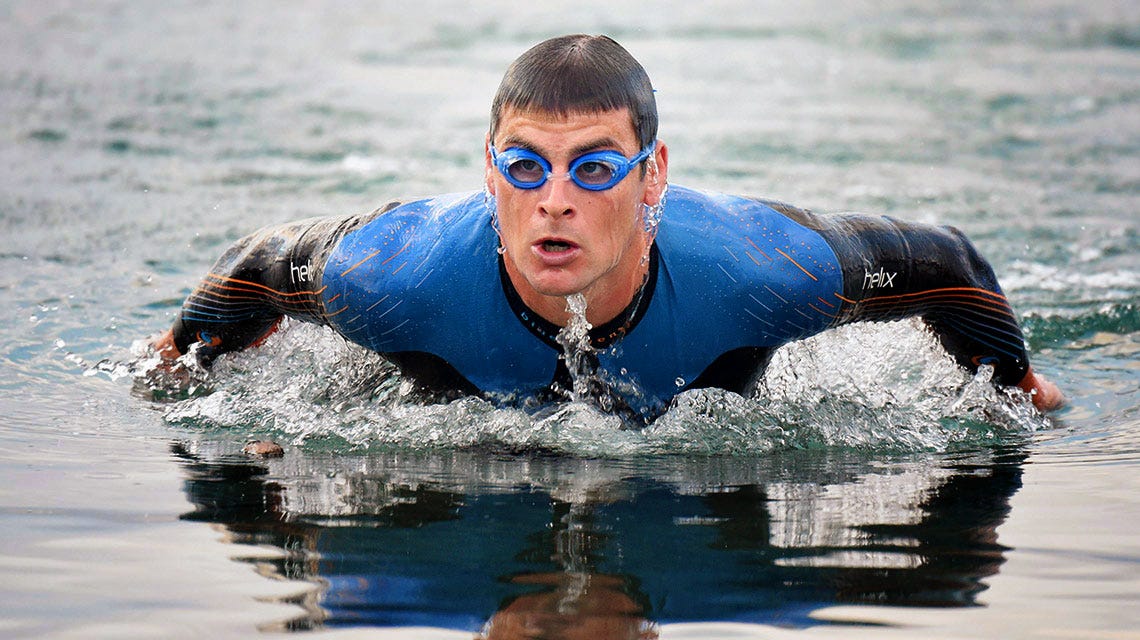
Neutral isn’t lazy. Neutral is ready. It’s the training mindset that keeps you fit enough—strong enough, resilient enough, aerobically alive enough—that if life (or your ego) taps you on the shoulder and says, “Hey… in six weeks you’re doing HYROX,” or “Your buddy has a trail race,” or “There’s a half-IRONMAN opening,” you can respond with a calm, confident:
“Okay. Let’s go.”
Neutral training is the difference between being “kind of active” and being ready for anything.
And yes—within reason—six weeks is enough time to sharpen for a wide range of challenges: a triathlon, a trail run, a middle-distance ultra, a tough functional fitness event, even the first step toward something like CrossFit-style competition (with the right expectations). The key is that your base isn’t just cardio and it isn’t just strength. It’s a system: engine, chassis, and durability.
Let me show you how to build it.
⸻
What “Neutral” Really Means
Neutral training is what you do when you’re not preparing for a single event… but you still want your body to feel like a weapon.
It has three goals:
1. Keep the aerobic engine quietly powerful (so endurance isn’t a shock).
2. Keep strength and power “online” (so intensity doesn’t break you).
3. Keep tissues resilient (so a sudden build doesn’t turn into a sudden injury).
Neutral isn’t specialized. Neutral is versatile. It’s how you stay close enough to “race-ready” that a six-week build becomes sharpening—not rebuilding from scratch.
⸻
The “Ready for Anything” Fitness Triangle
Think of your fitness like a triangle. Most people train one corner hard and ignore the others. Neutral training keeps all three corners strong.
1) The Engine
This is your aerobic base: heart, lungs, mitochondria, metabolic flexibility. It’s what lets you hold effort for a long time and recover between hard sessions.
In neutral, you don’t need monster volume. But you do need consistency and one session per week that reminds your body what endurance feels like.
2) The Gears
This is your ability to shift: tempo, threshold, surges, hard reps, fast running economy, hard bike power, aggressive intervals, repeatability.
In neutral, you don’t need to punish yourself, but you do need one session per week that touches uncomfortable.
3) The Chassis
This is the strength, stability, tendon integrity, joint control, and mobility that keeps everything together when demands change.
In neutral, strength training isn’t optional. It’s your insurance policy. It’s also your performance edge when your “anything” turns out to involve sled pushes, steep climbs, technical trails, or fatigue-based form breakdown.
⸻
The Neutral Weekly Framework
Here’s the simplest way I know to describe it:
Two endurance touches.
Two intensity touches.
Two strength touches.
One longer session.
(And yes, some days can double up.)
You’re not training for perfection. You’re training for preparedness.
A sample “Train in Neutral” week
Day 1 – Strength + Easy Aerobic (optional)
• 45–60 min strength (full-body)
• Optional 20–30 min easy spin/jog/row
Day 2 – Intensity (engine + gears)
• Intervals or tempo (run/bike/row/ski)
• Example: 6–10 x 2–3 min hard / equal easy
Day 3 – Aerobic Base
• 45–75 min easy endurance (zone 2 feel)
Day 4 – Strength + Short Finisher
• 45–60 min strength
• Finish: 6–10 min of controlled “burn” (sled, farmer carry, hill sprints, assault bike)
Day 5 – Mixed Modality / Threshold Touch
• 30–60 min total
• Example: 20–30 min tempo + mobility
• Or a short brick (bike + run) just to keep coordination
Day 6 – Long Session (the anchor)
• 75–150 min, mostly easy
• Rotate modalities: long ride one week, long trail run the next, hike-run combo another week.
Day 7 – Off or Active Recovery
• Walk, mobility, easy swim, or nothing at all
That’s neutral: enough stimulus to maintain breadth, not so much that you need a nap after tying your shoes.
⸻
The Two Sessions That Make Neutral Work
If you do nothing else, keep these two.
Session #1: The Long Easy Anchor
This is your base maintenance. It keeps your aerobic “floor” high and your recovery capacity strong. It also keeps your mind familiar with duration.
• Mostly conversational.
• Stay smooth.
• Finish feeling like you could do more.
This session is what makes a six-week ramp possible without your body acting like you’ve betrayed it.
Session #2: The Short Hard Truth
This is the session that prevents your fitness from becoming one-dimensional. It maintains top-end oxygen uptake, neuromuscular sharpness, and grit.
It can be:
• Bike intervals
• Hill reps
• Track work
• Row/ski erg repeats
• A short functional circuit done with discipline
The rule: hard, but not chaotic.
Neutral training doesn’t need you to get wrecked. It needs you to stay awake.
⸻
The Strength Rule: Build Armor, Not Fatigue
When people stay “generally fit,” they often do random hard workouts and skip strength because it feels like extra.
But if you want to be ready for a triathlon and HYROX and a trail race… strength is the bridge.
In neutral, I like strength training that hits:
• Hinge (deadlift pattern / RDL)
• Squat (front squat / goblet squat)
• Push (press variations)
• Pull (rows / pull-ups)
• Carry (farmer carries / suitcase carries)
• Core / trunk (anti-rotation, anti-extension)
• Single-leg work (lunges, step-ups)
You’re not trying to max out. You’re trying to become hard to break.
Two strength sessions per week, consistently, will do more for your “ready for anything” life than any random suffer-fest.
⸻
Why Six Weeks Works (When Neutral Is Done Right)
Six weeks is not enough time to build a brand-new athlete.
But it’s plenty of time to sharpen an athlete who has stayed in neutral.
If you’ve kept your triangle intact—engine, gears, chassis—then the six-week plan becomes:
• Add specificity (more running for a trail race, more compromised running for HYROX, more swims for triathlon)
• Increase the long session gradually
• Add one extra targeted intensity session every other week
• Practice the skill component (transitions, technical trails, specific lifts, pacing strategy)
That’s not a desperate scramble. That’s a controlled pivot.
⸻
How to Pivot in Six Weeks (Without Panicking)
Here’s the secret: don’t try to become a specialist overnight.
Instead, follow a three-step pivot:
Weeks 1–2: Tilt the Ship
• Keep neutral structure
• Add one session per week specific to the event
• Example: sled pushes for HYROX, trail hills for trail race, swims for triathlon
Weeks 3–4: Commit
• Two specific sessions per week
• Long session becomes more event-shaped
• Strength becomes more tailored (still present, but refined)
Weeks 5–6: Sharpen + Freshen
• Reduce total volume slightly
• Keep intensity touches
• Do event-rehearsal workouts (shorter, controlled)
• Arrive hungry, not fried
Six weeks isn’t a miracle. But it’s a very real performance window if you’ve stayed close.
⸻
The Mental Advantage of Neutral
There’s another reason I love this approach.
Neutral training gives you a different relationship with fitness.
You stop thinking, “I’m either training hard or I’m falling apart.”
You start thinking, “I’m always building the athlete I want to be.”
It’s calm. It’s sustainable. It’s powerful.
And it makes life more fun.
Because when someone says, “Want to do this ridiculous thing with me in six weeks?” you don’t have to negotiate with your body from zero. You’re already in the conversation.
⸻
Ready for Anything Starts With a Promise
Here’s the promise neutral training asks you to make:
• I will keep showing up.
• I will keep my engine alive.
• I will keep my strength online.
• I will protect my body’s durability.
• I will train like an athlete—even when I’m not training for an event.
That’s how you stay ready.
Not ready for one thing.
Ready for anything.
And when the moment comes—HYROX, a trail race, a triathlon, a middle-distance ultra, a challenge you didn’t see coming—you won’t need a perfect plan.
You’ll need what neutral gives you:
A body that remembers how to work.
A mind that doesn’t panic.
And a baseline fitness that turns six weeks into a launchpad.
That’s training in neutral.
That’s living ready.
As you taught me, the (big) engine is well kept and maintained, and as you wrote, 6 weeks to sharpen the focus and ‘rpm’ is what keeps this 60+yr old going without injuries and ready to go at it in 6 weeks.
Very nice post! Specifically for those, like me, that overcame the deadly age of 60 years old.