
The Most Important Thing
The key ROI in training

Every athlete wants to know the secret.
What is the one workout I should never miss?
What is the one session that will make the biggest difference?
What is the one thing that will move me from where I am now to where I want to be on race day?
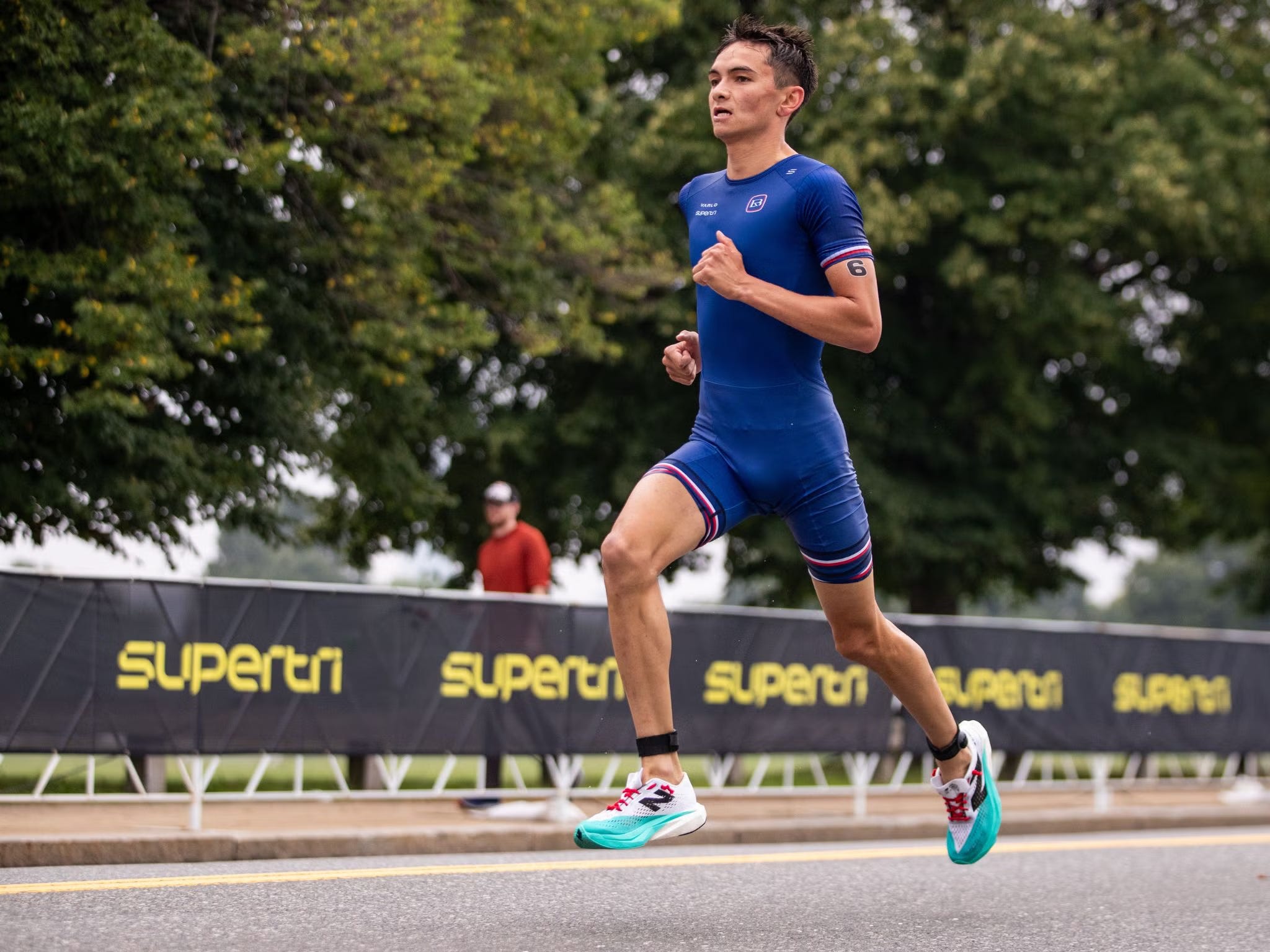
The answer is usually not hidden in some exotic training method. It is not always the hardest workout. It is not always the longest ride, the fastest run, or the most complicated interval set written in a language only a coach can understand.
The most important thing is much simpler than that.
The most important thing is the thing that matters most to the race you want to have.
That sounds obvious, but most athletes do not train that way. Most athletes train the things they already enjoy. Runners run more. Cyclists ride more. Strong swimmers keep polishing the swim. The athlete who loves the long ride will always find a reason to make Sunday bigger. The athlete who loves the track will always find a way back to the oval.
We are all drawn toward the part of the sport that makes us feel most like ourselves.
But racing does not care what you like.
Racing reveals what you have prepared.
Triathlon is honest that way. It gives you a report card in three different languages. The swim tells you one truth. The bike tells you another. The run usually tells you the truth you were hoping to avoid. And then the clock takes all of those truths and adds them up.
That clock is not cruel. It is clear.
If you know how to listen to it, it will tell you exactly where your training needs to go.
Let’s say you finish a race and you look at your splits. Maybe you were 20 percent slower than the athletes around you in the swim. Maybe you gave up time in the water before the race ever really felt like it began. Then you get on the bike and ride well. You hold your own. On the run, you lose a little more, but not much.
Most athletes in that situation will still go back to what they know. They will ride because they like riding. They will run because running feels like training. They will swim enough to survive.
But if you lost 20 percent of your race in the swim, the most important thing is not another ride you already know how to do.
The most important thing is the swim.
Not forever. Not because swimming is suddenly your identity. But because your race has told you where the biggest gap is. And if your biggest gap is in the water, your greatest opportunity is there too.
This is where training has to become honest.
Not emotional. Not ego-driven. Honest.
I used to think about racing Kona in terms of energy. Where was I losing it? Where was I spending it? Where was I wasting it? A weakness is not only a place where you lose time. It is often a place where you burn energy you need later.
A poor swim does not just cost you minutes in the ocean. It can cost you calm. It can cost you position. It can spike your heart rate before the bike. It can put you in traffic. It can make the first ten miles of the ride feel like recovery from panic instead of the beginning of your plan.
A weak bike does not just cost you bike split time. It can destroy your run.
A weak run does not just show up in the final miles. It changes how you ride because somewhere deep down you know you are trying to protect yourself from what is coming.
So the most important thing is not always the sport where you lose the most minutes on paper. It is the place where improving would change the entire shape of your race.
That is the key.
You are not training to become balanced in some perfect, symmetrical way. You are training to become effective. You are training so that the race you want becomes possible.
Here is a simple formula I would use.
First, write down your goal time for each part of the race: swim, bike, run, and transitions.
Then write down your most recent actual time for each part.
For each segment, calculate the gap:
Actual Time minus Goal Time equals Time Gap.
Then add all the time gaps together.
Now calculate each segment’s share of the total gap:
Segment Time Gap divided by Total Time Gap equals Weakness Share.
Finally, convert that into training focus:
Weakness Share multiplied by 100 equals the percentage of your “improvement time” that should go toward that weakness.
I would call it the Most Important Thing Formula:
MIT% = Segment Gap ÷ Total Gap x 100
Let’s make it real.
Suppose your goal race looks like this:
Swim: 30 minutes
Bike: 2 hours 30 minutes
Run: 1 hour 45 minutes
But your actual race was:
Swim: 36 minutes
Bike: 2 hours 36 minutes
Run: 1 hour 57 minutes
Your gaps are:
Swim: 6 minutes
Bike: 6 minutes
Run: 12 minutes
Your total gap is 24 minutes.
So your training focus becomes:
Swim: 6 ÷ 24 = 25 percent
Bike: 6 ÷ 24 = 25 percent
Run: 12 ÷ 24 = 50 percent
That does not mean 50 percent of all your training hours should suddenly become running. That would be a good way to get injured.
It means 50 percent of your deliberate improvement work should go toward the run. Technique. Durability. Pacing. Strength. Frequency. Fueling. The specific things that will close that gap.
There is a difference between training volume and improvement focus.
You still have to train all three sports. You still have to maintain your strengths. You still have to respect recovery, your age, your schedule, your injury history, and your life. But when you are choosing where to put your best attention, your best energy, your coaching dollars, your extra technique work, your mental focus, the formula gives you an answer.
It removes the emotion.
It removes the guesswork.
It tells you what matters.
There is one adjustment I would add. Sometimes the clock does not show the whole cost of a weakness. A swim weakness may only show a six-minute gap, but if it leaves you exhausted, anxious, and out of position, its true cost is bigger. A bike weakness may show up later as a run collapse. A run weakness may come from poor fueling on the bike, not poor running fitness.
So after you calculate the numbers, ask one more question:
Which weakness affects the rest of my race the most?
If one weakness damages everything after it, give it extra weight.
That is the art inside the science.
Data can point you toward the door. Awareness tells you whether to walk through it.
This is also where humility becomes one of the greatest training tools you have. It is hard to look at the thing you are not good at. It is hard to spend time in the part of the sport that makes you feel clumsy, slow, or exposed.
But that is where growth lives.
Not in the workouts that confirm who you already are.
In the workouts that invite you to become someone stronger.
If the swim is your most important thing, do not just swim more yards badly. Get help. Learn body position. Learn how to breathe without fighting the water. Learn how to relax. Learn how to make the water your ally instead of your opponent.
If the bike is your most important thing, do not just ride harder. Learn pacing. Learn power control. Learn nutrition. Learn how to stay aero without burning matches. Learn how to ride in a way that gives you the run you trained for.
If the run is your most important thing, do not simply pile on miles. Build consistency. Build strength. Build durability. Learn patience. Learn how to run the first half of the run so the second half does not become survival.
And if transitions are your most important thing, respect them. Free speed is still speed. A calm transition is not just faster. It sends a message to your nervous system that you are in control.
The most important thing is not always glamorous.
Often it is the thing you have been avoiding.
That is why it is important.
When you set a race goal, you are really setting a training truth. You are saying, “This is who I want to become by that day.” The race is just the place where you find out whether your daily choices matched that promise.
So before your next training block, look at your last race. Look at your goal. Look at the gap.
Then ask yourself one question:
What is the most important thing?
Not the thing I like most.
Not the thing I am already good at.
Not the thing that looks best on Strava.
The thing that will change my race.
Find that.
Train that.
Honor that.
Because when you identify the most important thing and give it the attention it deserves, training becomes clearer. The noise drops away. The purpose comes back. And every session, even the difficult ones, starts to feel connected to something bigger than the workout itself.
That is when progress begins.
Not when you do everything.
When you do the right thing.
Curious…what was your one thing?☝️
Interesting article. I'm not sure this would work for me as I don't trust my estimates; for example, I always think I should be able to run faster and never do. Is this because my estimates are unrealistic or is it because I can't run off the bike or is it a bike pacing issue? What I've done in the past is compared my times to winning times - to see where I ranked in each sport. That told me, for my AG, what pace I needed to be in the mix.